
What if the most dangerous mistake in DeFi is not signing the wrong transaction, but believing you understand your portfolio before you sign anything at all? A US-based user might hold ETH on Ethereum, stablecoins on an L2, a liquidity position on a decentralized exchange, and governance tokens on another network. The wallet may show these assets in one interface, yet the underlying risks remain distributed across different contracts, bridges, approval systems, and pricing assumptions.
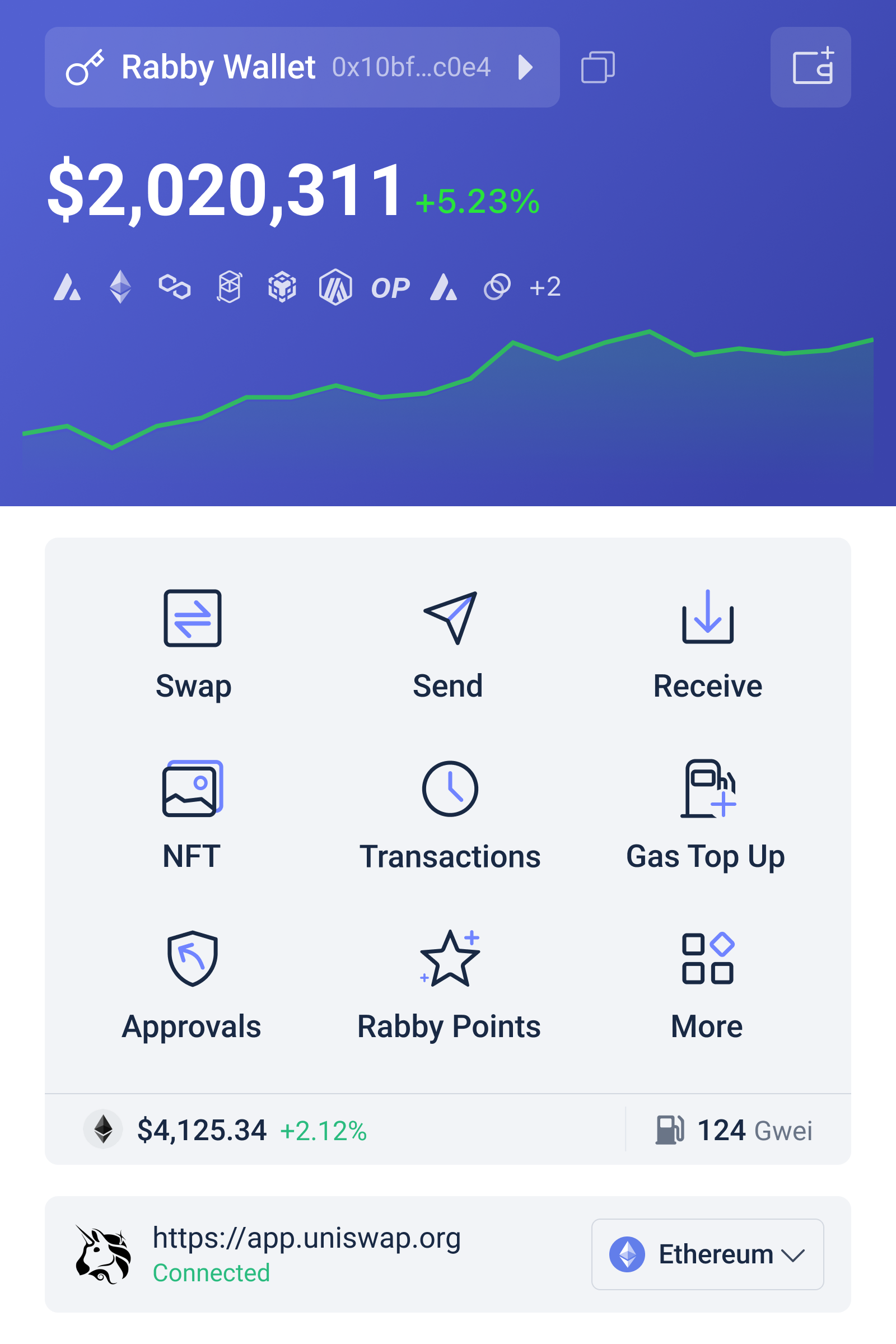
That is the central challenge of portfolio tracking in a multi-chain wallet. It is not simply a matter of adding balances together. A useful wallet must help answer three different questions: what do I own, where is it located, and what could change if I approve this transaction? Rabby Wallet is relevant to this workflow because it combines multi-chain asset visibility with transaction simulation and security-oriented warnings. Those tools can improve decision-making, but they do not remove the need to understand what the wallet is estimating or what its checks cannot know.
The Case: One Investor, Four Networks, Several Hidden Exposures
Consider a hypothetical DeFi user named Maya. Her wallet contains ether on Ethereum, USDC on an Ethereum layer-2 network, a wrapped token received through a bridge, and a position in a lending protocol. On a portfolio screen, these holdings may appear as one consolidated dollar value. That is convenient, especially when markets are moving quickly. But the total is only the surface layer of the portfolio.
Maya’s exposure is also shaped by network availability, token liquidity, smart-contract dependence, and the quality of the price data used to calculate the displayed value. The bridged asset may not carry exactly the same risk as the asset it represents. The lending position may include accrued interest but also liquidation risk. A token balance may be worth a displayed amount in normal market conditions while being difficult to sell at that price during a sharp market decline.
This leads to a common misconception: a multi-chain wallet creates a unified portfolio. More accurately, it creates a unified view of fragmented positions. That distinction matters. The interface can reduce the cognitive cost of checking several networks, but it cannot turn different forms of risk into one interchangeable asset. A dashboard is a map, not the territory.
For an advanced user, the most useful mental model is to treat portfolio tracking as an exposure inventory. The visible dollar balance is one field. Other fields include chain, contract address, token type, protocol dependency, collateral status, and whether the position can be exited quickly. This is why a multi-chain wallet can be valuable even when its portfolio total is imperfect: it makes fragmentation easier to inspect and compare.
What Transaction Simulation Adds to Portfolio Awareness
Transaction simulation changes the wallet from a passive balance viewer into a pre-trade inspection tool. Before a transaction is submitted, the wallet can attempt to show its expected effects: which assets may leave the account, which assets may arrive, what approvals are being granted, and whether the result resembles the user’s intended action.
Suppose Maya thinks she is swapping one stablecoin for another. A simulation may reveal the expected token outflow and inflow, the network fee, and the contract interaction involved. If the transaction instead appears to approve a token spender for an unexpectedly broad amount, or if the projected result contains an unfamiliar asset, that discrepancy becomes a reason to stop and investigate. The important mechanism is not that simulation “makes transactions safe.” It creates an opportunity to compare intention with execution before the transaction becomes irreversible.
That comparison is a powerful but underappreciated security habit. Users often read a website’s button label—“Deposit,” “Claim,” or “Stake”—and assume the blockchain transaction must match that wording. It may not. The website is an interpretation layer; the wallet is closer to the actual request being signed. A security-conscious wallet therefore helps expose the difference between the human-friendly action and the contract-level consequences.
For readers exploring an advanced https://rabby-wallet.at/ workflow, the practical lesson is simple: use simulation as a question generator. Ask what is leaving, what is arriving, which contract is involved, whether an approval is necessary, and whether the expected result is economically coherent. If the simulation is unclear or fails, do not automatically interpret that as proof of fraud—but do not treat it as a routine green light either.
Myths About Multi-Chain Portfolio Tracking
Myth: One total balance means one level of risk
Reality: the same dollar value can represent very different risk profiles. Native ETH held directly, a liquid stablecoin, a volatile governance token, and a receipt token from a lending protocol are not equivalent merely because an interface assigns them prices. Portfolio tracking is most informative when it preserves the distinctions behind the total.
Myth: A warning means the transaction is definitely malicious
Reality: security warnings are signals, not courtroom verdicts. Automated systems may flag unusual contract behavior, a new token, an unfamiliar spender, or a simulation mismatch. Some legitimate protocols can look unusual, particularly during upgrades or complex interactions. Conversely, a transaction that produces no warning can still involve economic risk, a compromised website, a manipulated market, or a mistake in the user’s own assumptions.
Myth: Simulation predicts the future blockchain state
Reality: simulation is a conditional estimate. It models what may happen if the transaction is executed under particular assumptions about current state, gas conditions, contract behavior, and available pricing information. Between simulation and confirmation, state can change. A pool’s reserves may move, a lending position may become less healthy, or another transaction may affect execution. Simulation improves visibility; it does not provide certainty.
Myth: Portfolio tracking replaces on-chain verification
Reality: a wallet interface is an interpretation of blockchain data. When the decision is material, users should still verify the network, recipient or spender, contract address, token amount, and approval scope. This is especially important when interacting with links received through social media, search results, or unsolicited messages. Convenience is useful, but it should not become a reason to skip verification.
The Trade-Off Behind a Cleaner Dashboard
Consolidation has a genuine trade-off. A single dashboard reduces fragmentation and makes it easier to notice concentration—for example, that a large share of a portfolio is tied to one token, one protocol, or one bridge. Yet abstraction can also hide operational differences. Two assets may look adjacent in a list while living on different networks, using different contracts, and having different exit paths.
There is also a pricing limitation. Portfolio values depend on market data and token identification. For widely traded assets, a displayed estimate may be reasonably useful. For thinly traded tokens, newly issued assets, liquidity-provider receipts, or complex derivatives, the number can be unstable or misleading. A portfolio tracker should therefore be read as a measurement system with assumptions, not as an unquestionable account statement.
The same principle applies to transaction simulation. A simulation may identify the expected transfer but not evaluate whether the trade is economically wise. It may show that a user will receive a token, while leaving the user to determine whether that token is liquid, authentic, or worth the opportunity cost. It may expose an approval, but the user still has to decide whether the protocol deserves that permission.
In other words, security tooling is strongest against certain classes of error: signing an unintended transfer, interacting with a suspicious contract, missing a network mismatch, or overlooking an approval. It is weaker against errors of judgment, such as overpaying during volatile conditions, accepting excessive slippage, or concentrating too much capital in a correlated group of protocols.
A Practical Framework for Using a Multi-Chain Wallet
Before signing, separate the review into three layers. First, check identity: is this the correct network, application, contract, token, and recipient? Second, check mechanics: what assets leave the wallet, what assets arrive, what permission is granted, and what fees or slippage apply? Third, check economics: does the result make sense given the position’s liquidity, leverage, time horizon, and downside?
This framework is reusable because it distinguishes a technical error from an investment decision. A transaction can be technically valid and still be a poor trade. It can also be economically sensible in principle but technically dangerous because the user is interacting with the wrong contract. Transaction simulation and wallet warnings primarily support the first two layers; disciplined portfolio analysis is needed for the third.
For portfolio reviews, look beyond the headline total. Group assets by network, protocol, and economic function. Identify which holdings are immediately liquid, which are locked or dependent on a contract, and which are representations of another asset. Then compare the result with the transactions you are about to authorize. A new approval or deposit should change the portfolio inventory in a way you can explain in plain English.
US users should also keep operational records for taxable activity and account security. A wallet view can help organize transactions across networks, but it is not automatically a complete tax ledger. Transfers between personally controlled addresses, swaps, staking-related activity, liquidity positions, and protocol rewards may require careful reconstruction. The exact treatment depends on facts and applicable rules, so portfolio visibility should support recordkeeping rather than be mistaken for tax advice.
What to Watch as Wallets Become More Analytical
If wallet software continues to improve, the most meaningful development may not be another larger token list. It may be better explanation: clearer distinctions between assets held directly and assets represented by protocol claims, more explicit approval context, and more useful summaries of how a proposed transaction changes a user’s total exposure.
That future is conditional. Better analysis depends on reliable token metadata, accurate pricing, readable contract behavior, and simulations that remain informative as protocols become more composable. Complex transactions can be difficult to summarize without losing important detail. Users should therefore watch not only whether a wallet adds features, but whether those features reveal assumptions and uncertainty instead of hiding them behind a reassuring score.
The durable lesson from Maya’s case is that a multi-chain wallet is most valuable when it helps the user maintain a correct mental model. Portfolio tracking answers where value appears to be. Simulation helps test what a transaction is likely to do. Security warnings identify reasons for caution. None of these tools can substitute for judgment, but together they can move DeFi activity from blind signing toward deliberate verification.
FAQ: Portfolio Tracking and Rabby Wallet
Why use a multi-chain wallet for portfolio tracking?
A multi-chain wallet can bring assets from several networks into one review process, making it easier to identify concentration, forgotten balances, and protocol exposure. The limitation is that consolidation does not eliminate differences in liquidity, bridge risk, contract dependence, or network availability.
Can transaction simulation guarantee that a DeFi transaction is safe?
No. Simulation can show expected effects and reveal mismatches between an intended action and a contract request, but it is conditional and may not capture every future state change or economic risk. Users should still verify the application, contract, permissions, slippage, and broader portfolio consequences.
What should I check when a portfolio value looks wrong?
Check the selected networks, token identification, contract addresses, market prices, and whether the asset is a direct token balance or a claim created by a protocol. Thin liquidity and unusual token structures can make displayed values less reliable than they appear.


